Respite Care in Assisted Living and Nursing Homes: What Households Ought To Know About Short-Term Senior Care
Business Name: BeeHive Homes of Volcano Cliffs
Address: 6230 Montaño Rd NW, Albuquerque, NM 87120
Phone: (505) 302-1919
BeeHive Homes of Volcano Cliffs
At BeeHive Homes of Volcano Cliffs, New Mexico, we offer the finest assisted living experience available in a cozy, comfortable homelike setting. Each of our residents has their own spacious room with an ADA approved bathroom and shower. We prepare and serve delicious home-cooked meals three times a day every day. We maintain a small, friendly elderly care community. We provide regular activities that our residents find fun and contribute to their health and well-being. Our staff is attentive and caring and provides assistance with daily activities to our senior living residents in a loving and respectful manner. We would like to invite you to tour and experience our assisted living home and feel the difference.
6230 Montaño Rd NW, Albuquerque, NM 87120
Business Hours
Families typically reach out about respite care at a breaking point. A partner has actually not slept through the night in months. An adult kid is managing a full‑time task, parenting, and day-to-day visits to a parent who requires aid with nearly everything. A fall, a hospitalization, or just caregiver exhaustion lastly requires the concern: is there a safe place my loved one can stay for a brief time while we regroup?
Respite care in assisted living and nursing homes exists precisely for these moments. Utilized well, it can support a difficult situation, prevent burnout, and even improve long‑term results for both the older grownup and the main caretaker. Used poorly, it can feel hurried, puzzling, and disruptive.
This is an in-depth take a look at what households should understand before organizing short‑term senior care, with a concentrate on how respite works inside assisted living neighborhoods and experienced nursing facilities, and what trade‑offs to expect.
What respite care in fact suggests in senior care
The term "respite care" simply indicates momentary care that gives the usual caregiver a break. In practice, it usually refers to a short remain in an assisted living community or a nursing home, often called:
Respite stay.

The function is not simply to "park" somebody. Great respite care intends to maintain security, address medical or functional needs, and provide structure, social contact, and some satisfaction while the household caretaker rests or manages other urgent matters.
Most respite remains last from a few days to a few weeks. Some programs cap remains at 30 days, others are more versatile. I have actually seen households utilize respite yearly for prepared caretaker vacations, and others utilize it as a bridge while home care services are being arranged or the home is being modified.
What respite care is not: a magic reset button or a method to repair long‑standing family conflict. It is a tool, one piece of the broader senior care toolbox, that works best when expectations are clear.
Why families turn to respite care
Caregivers rarely request help early. They tend to extend till something provides. By the time respite care turns up, there is frequently an urgent trigger. Typical circumstances I see:
A partner looking after a partner with dementia has gone months with broken sleep and is beginning to make errors, miss out on medications, or feel unsafe driving.
An adult child is covering most hands‑on care after work and on weekends, while also raising kids. A week of organization travel or a school holiday lastly makes the schedule impossible. A hospitalization causes release orders that are more intricate than previously. The health center wishes to send out the patient home, however the household knows the home setup is not ready. A caregiver has surgery, covid, or another health problem and can not safely offer transfers, toileting aid, or continuous guidance for a period of time. Vacations or family crises stretch everybody thin, and a brief stay ends up being the most practical way to keep an older adult both safe and cared for.Behind all of these is a basic truth: sustained caregiving is work. Physically, mentally, financially. Respite care acknowledges this reality and builds in breathing room without abandoning the older adult's needs.
Types of respite: assisted living versus nursing home
Respite care in assisted living and respite care in a nursing home both offer short‑term stays, however they are constructed on really different care models.
Assisted living is primarily a social and support model. Citizens normally reside in apartment‑style systems, receive assist with everyday activities such as bathing, dressing, and medications, and have access to meals, housekeeping, and activities. Nursing personnel may be on site, but 24‑hour skilled nursing is not the main design.
Nursing homes, or proficient nursing facilities, run on a medical design. They have licensed nurses all the time, more clinical oversight, and the capability to manage complicated medical requirements, such as injury care, IV medications, oxygen management, tracheostomies, or intensive rehab therapies.
That distinction in core purpose shapes what respite looks like in each setting.
In assisted living, respite stays are best matched for older adults who:
Need cueing or hands‑on assist with everyday activities.
Are usually clinically stable.May have early to mid‑stage dementia, as long as they are not highly resistive or susceptible to wandering into hazardous areas. Do best in a home‑like, social setting instead of an institutional one.
In a nursing home, respite care makes good sense for older adults who:
Have simply been in the hospital and still require rehab therapies.
Require knowledgeable nursing tasks such as injections numerous times a day, complex wound care, or regular medical monitoring. Have advanced dementia with considerable behavioral signs that a normal assisted living can not manage. 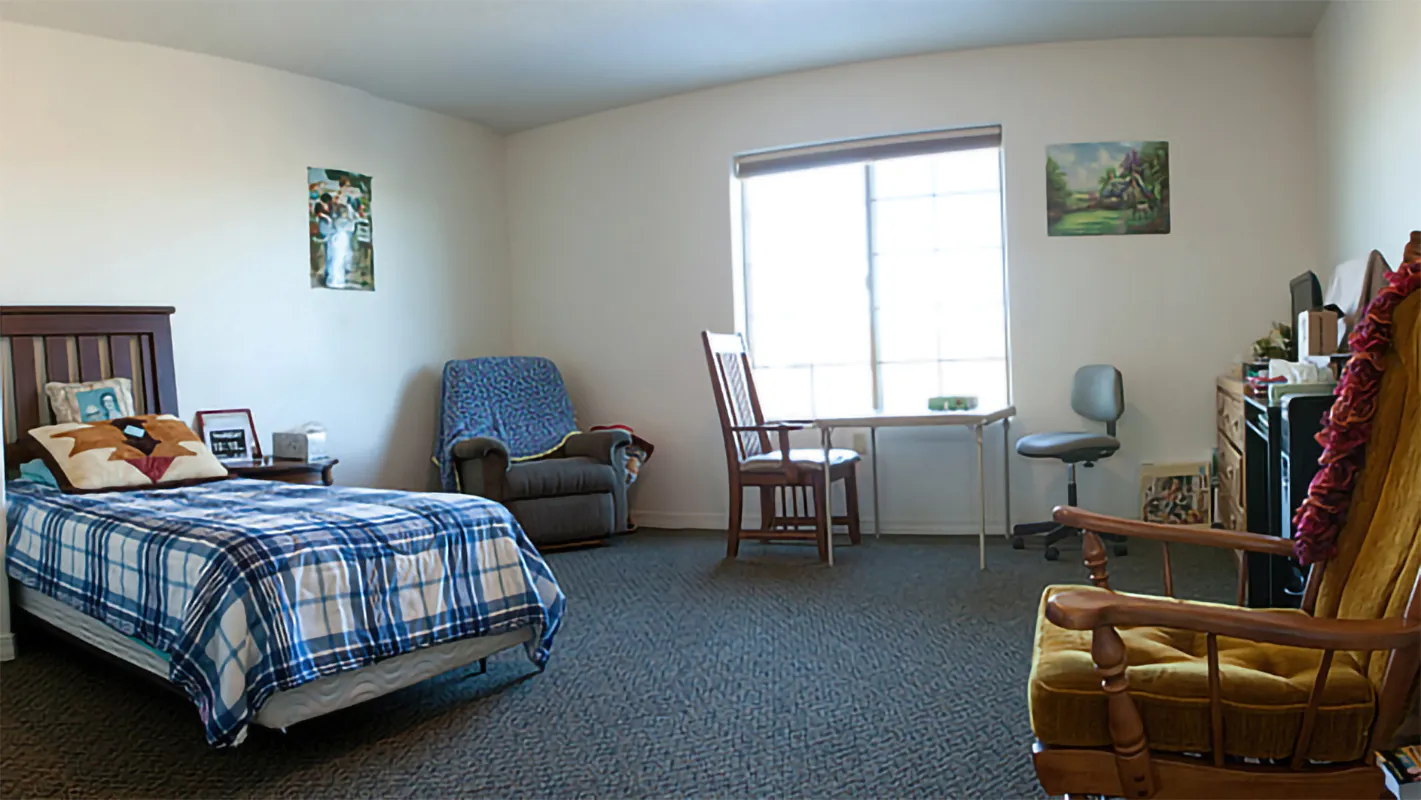
The very same individual might utilize each type at various points. I have worked with individuals who first used a nursing home stay after a hip fracture, then later used respite in assisted living once they stabilized and no longer needed constant medical care.
Key distinctions households notice
When households tour both types of communities, a couple of distinctions come up repeatedly. A concise contrast assists set expectations.
Here is a quick list of differences that frequently matter to households buying respite care:
- Environment: Assisted living generally feels more like an apartment building or hotel, with typical lounges and dining-room. Nursing homes feel more clinical, with nursing stations, more equipment, and shared rooms.
- Staff focus: Assisted living staff spend more time on social engagement and everyday living assistance. Nursing home groups focus more on medical tasks, rehabilitation, and scientific stability.
- Typical roommate scenario: Assisted living respite stays are regularly in personal or semi‑private "visitor" systems. In nursing homes, shared spaces are common, especially if insurance is paying.
- Activity style: Assisted living calendars emphasize social activities, getaways, and entertainment. Nursing homes provide activities however need to accommodate individuals who are weaker or clinically fragile.
- Cost structure: Assisted living respite is typically private pay, typically at a day-to-day rate that consists of a service bundle. Nursing home stays might involve Medicare or Medicaid protection under certain conditions, however private pay prevails when those do not apply.
Families must think less in terms of "which is much better" and more in terms of "which is the more secure and better match for my loved one's present needs."
What actually happens throughout a respite stay
Short term senior care in a residential setting has its own rhythm. Understanding the flow can lower anxiety for both the older grownup and the family.
Admission begins with an evaluation. A nurse or care coordinator will evaluate medical history, present medications, movement, continence, cognition, and diet plan requirements. Lots of communities need a current physical and TB test. This assessment drives the care strategy, so supplying precise detail matters, even if some info feels personal.
The first day or 2 are usually about orientation. Personnel find out the resident's regimen: what time they typically awaken, early morning habits, how they choose to shower, what foods they do not like, whether they snooze. Older grownups who have never lived in a senior community may feel disoriented initially. Basic things like identifying clothing, bringing a familiar pillow or framed photos, and agreeing on an interaction plan can ease the transition.
Daily life for respite citizens generally mirrors long‑term homeowners. They consume meals in the dining room, join activities if they wish, receive support based upon the care strategy, and have housekeeping and laundry handled by staff. In nursing homes, there might be physical, occupational, or speech therapy sessions scheduled a number of times a week if the stay is tied to rehabilitation.
Medical oversight during respite in assisted living is limited to what that specific neighborhood deals. At a minimum, staff manage medication administration and screen for obvious modifications. Some communities have an on‑site nurse professional who can attend to small concerns. For considerable medical changes, households must anticipate that the resident might be sent out to the emergency department, simply as they would from home.
In nursing homes, medical oversight is more structured. There is 24‑hour nursing presence, regular physician or nurse practitioner rounds, and frequent essential indication monitoring for those in rehabilitation programs. Households need to still preserve contact, but they can generally presume a higher standard of clinical observation.
Communication patterns also vary by community. Some call households proactively, others only when there are changes. It helps to request for a main point of contact and agree on how often you will get updates.
How dementia impacts respite care choices
Dementia alters the calculus. A cognitively healthy older adult might treat respite care like a brief hotel stay. A person with moderate or sophisticated dementia may experience it as a complicated disruption.
In assisted living, memory care units in some cases provide respite remain in protected, specific wings. Staff are trained to manage wandering, recurring concerns, and resistance to care. The environment is normally quieter, with easier hints to support orientation.
In nursing homes, respite for dementia typically overlaps with the wider category of long‑term care. Some centers have protected units for residents who are at danger of elopement or have severe behavioral symptoms.
Families need to take notice of:
How the neighborhood handles new citizens with dementia during the very first 72 hours.
Staff consistency, considering that a lot of unknown faces can intensify agitation. Noise levels and environmental overstimulation. Techniques to medication, specifically using antipsychotics or sedatives.A short, inadequately handled respite experience can sour an older adult on the concept of senior care altogether. Making the effort to discover a dementia‑aware setting, even if it costs a bit more, frequently pays off later if longer stays become necessary.
respite careCosts, coverage, and the fine print
Money concerns come up early and frequently, and for great factor. Respite care sits at the intersection of healthcare and housing, and the financial guidelines are messy.
In assisted living, respite stays are almost always personal pay. Daily rates vary commonly by region and level of care, however it prevails to see figures such as:
Roughly 150 to 300 dollars daily in lower‑cost areas, in some cases more in high‑cost markets.
Greater rates for locals who need two‑person transfers, insulin management, or other additional care.Some communities require a minimum stay, for instance, 7 or 14 days, and may charge a one‑time neighborhood cost even for respite. Others waive that cost as a reward. A couple of treat respite as a trial period, crediting part of the cost toward the first month if the household chooses to transform to long‑term residency.
Nursing home respite stays may include a mix of private pay and insurance. Key points:
Medicare covers short‑term experienced nursing facility care after a certifying health center stay, however the rules specify and not all respite remains satisfy criteria. When they do, protection is normally aimed at rehabilitation, not just caretaker relief.
Medicaid in some states funds short‑term nursing home respite for eligible people as part of home and community‑based waiver programs. The details depend upon state policy and waiting lists. Long‑term care insurance coverage sometimes have explicit respite care advantages, often a set variety of days each year, payable in numerous settings.Families must request:
A written rate sheet that specifies the everyday rate, what it consists of, and what counts as "additional care."
Any nonrefundable costs, such as assessment charges, laundry costs, or medication management surcharges. Billing practices if insurance coverage is involved, particularly who files the claims and what takes place if coverage is denied.I recommend households to run a simple situation analysis in composing. For example, if Mom stays 10 days at 275 dollars daily plus a 300‑dollar one‑time fee, that is 3,050 dollars. If that exact same 10 days at a nursing home rehab system would mostly be covered by Medicare after a qualifying hospitalization, however the environment would be scientifically extreme and less home‑like, is the trade‑off worth it? Drawing up those comparisons grounds decisions in actual numbers instead of vague impressions.
A useful list before reserving respite care
Arranging respite on short notice prevails, however a little structure can prevent the errors that result in disappointments. The following checklist concentrates on what families can realistically do, even if they only have a week.
- Confirm medical appropriateness: Ask your loved one's primary physician or health center discharge organizer whether assisted living level care is safe, or whether 24‑hour experienced nursing is necessary.
- Clarify objectives: Choose whether the primary objective is caregiver rest, rehab and enhancing for the older grownup, screening whether common living works, or a mix of these.
- Tour and observe: Visit a minimum of one assisted living and one nursing home if possible. Take note of odors, staff interactions, resident engagement, and how respite guests are housed.
- Pin down logistics: Ask about minimum stay, day-to-day rate, what is included, medication handling, visiting hours, and what personal products to bring.
- Prepare your loved one: Frame the stay in favorable but sincere terms, such as "a brief stay to get extra assistance and provide me an opportunity to recuperate from my surgical treatment," and involve them in picking familiar clothing, photos, and comfort items.
Treat this checklist as a guide, not a stiff script. Households vary in what they can realistically handle before a stay. The objective is to minimize avoidable surprises, not to create a new layer of pressure.
Common concerns and how to think of them
Caregivers typically sit with the very same peaceful worries, whether they voice them or not.
One frequent issue is regret. "If I liked him enough, I would not require a break." I advise families that no one concerns pilots for getting out of the cockpit to rest between flights. We comprehend fatigue impacts safety and judgment. Caregiving is no different. Rest legitimizes your role, it does not diminish it.
Another concern: "What if something bad happens and I am not there?" Danger does not disappear due to the fact that someone remains in a facility. Falls, infections, and confusion can still take place. The pertinent question is whether guidance and assistance are more powerful than what was realistically possible in your home. Oftentimes, especially at night, the response is yes.
Families also fear that a respite stay will turn into permanent placement against their will. Respectable communities do not lock households into long‑term agreements from a respite admission, though some will certainly recommend remaining if the match is great. The genuine risk is more mental than contractual: once caregivers experience a week of complete nights of sleep, they may understand they can no longer securely resume the previous intensity of care. That is not a trap, it is insight.
Finally, older grownups in some cases stress they are being "sent out away." This is specifically painful when the older grownup has long valued self-reliance. How you frame the stay matters. Highlighting concrete goals, such as "working with therapy to develop strength," or "staying somewhere safe while we get the restroom remodelled," respects their self-respect more than unclear reassurances.
Avoiding the most typical mistakes
Over time, specific patterns show up in respite stories that went poorly.
Families often underreport requirements during the assessment, intending to keep expenses lower or avoid frightening a neighborhood. The drawback is foreseeable: staff are unprepared, care plans are underpowered, and disputes emerge. It is generally better to be candid about incontinence, behavioral episodes, or night wandering.
Another mistake is assuming that a lovely structure warranties excellent care. Marble lobbies and fresh paint do not transfer citizens safely. Quiet observation informs you more. Do call lights sound forever? Are residents groomed and appropriately dressed? Do staff welcome citizens by name or stroll previous them?
Some caregivers vanish totally throughout a respite stay. While the point is to rest, it assists to maintain a cadence of check‑ins, even if by phone. This provides staff a resource for questions and assures the older grownup. Quick visits, specifically early on, can minimize anxiety.
On the other hand, hovering can also backfire. If family members question every decision in front of the older grownup or override personnel constantly, it creates confusion and undermines trust. A healthier balance is to raise issues independently, ask for routine updates, and give the group space to carry out the care plan.
When respite ends up being a pathway to longer‑term care
One underappreciated worth of respite care is as a low‑commitment test of common living. Families frequently say, "Mom would never ever agree to a nursing home" or "Dad could not deal with assisted living." After a brief stay, they often find:
The older adult actually enjoys the social environment more than expected.
Personnel notice safety concerns that were not obvious during quick family visits. Caretakers experience such relief that they reassess what is sustainable.In some cases, the older adult declines to return home, especially if home felt isolating. In others, the respite stay verifies that home stays the very best setting, but with added assistances such as home health services or adult day programs.
A beneficial exercise after any respite stay is a quick, honest debrief amongst family and, when suitable, with the older grownup. Questions to ask:
Did this stay improve anybody's health, tension level, or functioning?
What elements were plainly positive or plainly negative? If we needed aid again in six months, what would we do differently?Treat respite not just as a pressure valve, however as data. It reveals how your loved one manages in a structured environment and how you, as caretakers, function with support.
Bringing it back to day‑to‑day senior care
Respite care in assisted living and nursing homes is one of the more flexible tools available in senior and elderly care. It can support a spouse who simply requires ten nights of unbroken sleep. It can provide an adult kid space to recuperate from surgical treatment or meet a work dedication. It can support somebody after a hospitalization until the best home supports are in place.
The secret is positioning. Line up the setting with medical truths. Align expenses with your budget and insurance coverage possibilities. Align expectations with what short‑term residential care can reasonably provide.
Families that approach respite care with clear goals, honest information, and a determination to observe and discover tend to come away not only rested, however better geared up to navigate the next phases of aging. In a landscape where there are no perfect responses, that combination of relief and insight is worth a fantastic deal.
BeeHive Homes of Volcano Cliffs provides assisted living care
BeeHive Homes of Volcano Cliffs provides respite care services
BeeHive Homes of Volcano Cliffs supports assistance with bathing and grooming
BeeHive Homes of Volcano Cliffs offers private bedrooms with private bathrooms
BeeHive Homes of Volcano Cliffs provides medication monitoring and documentation
BeeHive Homes of Volcano Cliffs serves dietitian-approved meals
BeeHive Homes of Volcano Cliffs provides housekeeping services
BeeHive Homes of Volcano Cliffs provides laundry services
BeeHive Homes of Volcano Cliffs offers community dining and social engagement activities
BeeHive Homes of Volcano Cliffs features life enrichment activities
BeeHive Homes of Volcano Cliffs supports personal care assistance during meals and daily routines
BeeHive Homes of Volcano Cliffs promotes frequent physical and mental exercise opportunities
BeeHive Homes of Volcano Cliffs provides a home-like residential environment
BeeHive Homes of Volcano Cliffs creates customized care plans as residents’ needs change
BeeHive Homes of Volcano Cliffs assesses individual resident care needs
BeeHive Homes of Volcano Cliffs accepts private pay and long-term care insurance
BeeHive Homes of Volcano Cliffs assists qualified veterans with Aid and Attendance benefits
BeeHive Homes of Volcano Cliffs encourages meaningful resident-to-staff relationships
BeeHive Homes of Volcano Cliffs delivers compassionate, attentive senior care focused on dignity and comfort
BeeHive Homes of Volcano Cliffs has a phone number of (505) 302-1919
BeeHive Homes of Volcano Cliffs has an address of 6230 Montaño Rd NW, Albuquerque, NM 87120
BeeHive Homes of Volcano Cliffs has a website https://beehivehomes.com/locations/volcano-cliffs/
BeeHive Homes of Volcano Cliffs has Google Maps listing https://maps.app.goo.gl/vC78eXZrUYuJ298v9
BeeHive Homes of Volcano Cliffs has Instagram page https://www.instagram.com/beehivealbuquerquewest
BeeHive Homes of Volcano Cliffs has an TikTok page https://www.tiktok.com/@beehivehomesalbuq
BeeHive Homes of Volcano Cliffs won Top Assisted Living Homes 2026
BeeHive Homes of Volcano Cliffs earned Best Customer Service Award 2025
BeeHive Homes of Volcano Cliffs placed 1st for Senior Living Communities 2026
People Also Ask about BeeHive Homes of Volcano Cliffs
What is BeeHive Homes of Volcano Cliffs Living monthly room rate?
Our base rate is $7,100 per month. We do an assessment of each resident's needs upon move-in, so each resident's rate may be slightly higher. However, there are no add-ons or hidden fees. We also charge a one-time community fee of $2,000 at move-in
Does Medicare or Medicaid pay for a stay at Bee Hive Homes?
Medicare pays for hospital and nursing home stays, but does not pay for assisted living. Some assisted living facilities are Medicaid providers, but we are not. We do accept private pay, long-term care insurance, and we can assist qualified Veterans with approval for the Aid and Attendance program
Do we have a nurse on staff?
We do have a nurse on contract who is available as a resource to our staff but our residents' needs do not require a nurse on-site. We always have trained caregivers in the home and awake around the clock
What can you tell me about the food at Bee Hive?
You have to smell it and taste it to believe it! We use dietitian-approved meals with alternates for flexibility, and we can accommodate needs for different texture and therapeutic diets. We have found that most physicians are happy to relax diet restrictions without any negative effect on our residents
Do we allow pets?
We do allow small pets as long as the resident is able to care for them. State regulations also require that we have evidence of current immunizations for any required shots
Where is BeeHive Homes of Volcano Cliffs located?
BeeHive Homes of Volcano Cliffs is conveniently located at 6230 Montaño Rd NW, Albuquerque, NM 87120. You can easily find directions on Google Maps or call at (505) 302-1919 Monday through Sunday 10:00am to 7:00pm
How can I contact BeeHive Homes of Volcano Cliffs?
You can contact BeeHive Homes of Volcano Cliffs by phone at: (505) 302-1919, visit their website at https://beehivehomes.com/locations/volcano-cliffs/ or connect on social media via Instagram Facebook or TikTok
K Style Kitchen provides a convenient local restaurant where families supporting loved ones through Assisted living memory care senior care elderly care and respite care can enjoy an outing together.